
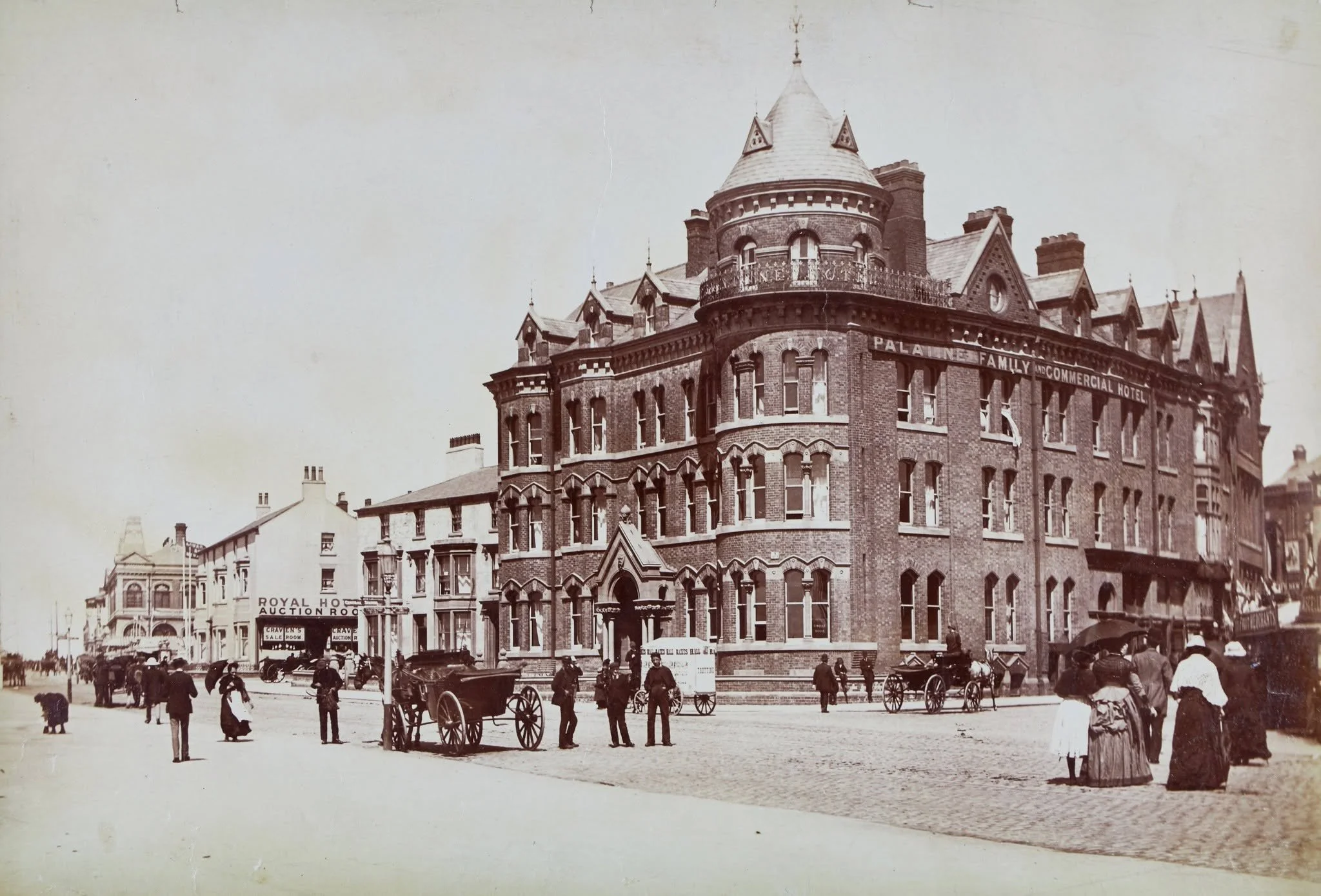
This year, Blackhurst Budd marks 150 years since the Blackhurst practice was first established in Blackpool. To understand what that milestone really means, it helps to picture the town as it was in 1876, because the Blackpool of that year bore very little resemblance to the place we know today.
A Town Still Finding Its Feet
In 1871, Blackpool's population was just over 7,000 people. It was a growing resort town, attracting visitors from the mill towns of Lancashire who arrived by train seeking sea air and respite from industrial life. But it was still relatively modest in scale, and its identity as one of Britain's great seaside destinations was still being established.
1876 was a significant year in the town's development. It was the year Blackpool was incorporated as a municipal borough, gaining its own local governance for the first time. The town was, in a very real sense, formally establishing itself as a place, and it was into that environment that William Blackhurst set up his legal practice.
The Promenade and the Tower
The promenade that is so central to Blackpool's identity today existed in a much earlier form in 1876, but the grand Victorian seafront that most people picture was still decades away from completion. The promenade was extended and improved significantly through the 1870s and 1880s as the town grew, with the sea wall and walkway gradually taking the shape that would define the resort.
Blackpool Tower, perhaps the town's most iconic landmark, would not open until 1894, nearly two decades after the Blackhurst practice was established. The Winter Gardens, which opened in 1878, was among the early large scale entertainment venues beginning to shape the town's character as a destination for leisure and entertainment.
The illuminations, now a defining feature of Blackpool's autumn calendar, began in a very modest form in 1879 with just eight electric arc lamps. The spectacular display that draws millions of visitors today was a long way off.
Getting Around Town
In 1876, Blackpool's famous trams had not yet arrived. The tramway that would become one of the longest running in the world did not begin operating until 1885. Travel along the promenade and through the town was on foot, by horse drawn carriage, or by the railway that had connected Blackpool to Preston and the wider region since the 1840s.
It was the railway, more than anything else, that had driven Blackpool's growth. The arrival of direct services from Manchester and the mill towns of Lancashire had opened the resort up to working class visitors in a way that transformed the town's economy and character. By 1876, the railway was well established and the tourist trade was growing steadily.
Daily Life in 1876
For those living and working in Blackpool in 1876, daily life was shaped by realities that are difficult to fully appreciate from the vantage point of 2026. There was no electricity in the home. Gas lighting was available in wealthier households and along some streets, but candles and oil lamps remained the norm for most. There was no running hot water, no telephone, and no form of mass communication beyond the newspaper.
The working week was long, typically six days, and the concept of a paid holiday was not yet established for most workers. The people who visited Blackpool for their annual break were often doing so as a genuine luxury, and the town's economy was built around making the most of the summer season when the visitors came.
The Professional World
In that environment, the legal profession occupied a particular place in civic life. Solicitors were among the small number of professional men in a town like Blackpool, alongside doctors, clergymen and the emerging class of businessmen driving the resort's development. Legal services were not widely accessible to ordinary working people in the way they are today. Property transactions, business matters and disputes were the primary work of a solicitor in 1876.
When William Blackhurst established his practice on Church Street that year, he was setting up in a town that was growing rapidly and beginning to formalise its institutions. The timing was, in retrospect, significant.
150 Years On
The Blackpool of 2026 is a very different place from the borough of 1876, and yet the connections are there. The promenade, the tower, the trams, the illuminations: all of them came after Blackhurst Budd's story in the town had already begun.
As we mark 150 years this year, we do so as a firm that has been part of Blackpool's story through all of it, from a modest Victorian borough to the town it is today.