
Family law is one of the most personal areas of legal practice. It deals with the relationships and arrangements that matter most to people: marriage, separation, and children. At Blackhurst Budd, it has been a core part of what we do for generations.
But the family law of 2026 would be almost unrecognisable to the solicitors practising in 1876. The changes over 150 years reflect not just legal reform, but a fundamental shift in how society understands family life itself.
Marriage in 1876
In 1876, marriage was a largely permanent legal institution. Divorce existed, but it was expensive, socially stigmatising, and practically inaccessible to most people. The Matrimonial Causes Act of 1857 had established a civil divorce court for the first time, removing the need for a private Act of Parliament, but the process remained beyond reach for the majority of the population.
Grounds for divorce were also heavily weighted against women. A husband could divorce his wife on the grounds of adultery alone. A wife seeking divorce needed to prove adultery combined with additional grounds such as cruelty or desertion. The law reflected the social assumptions of the time: that marriage was a contract in which the parties were not equal.
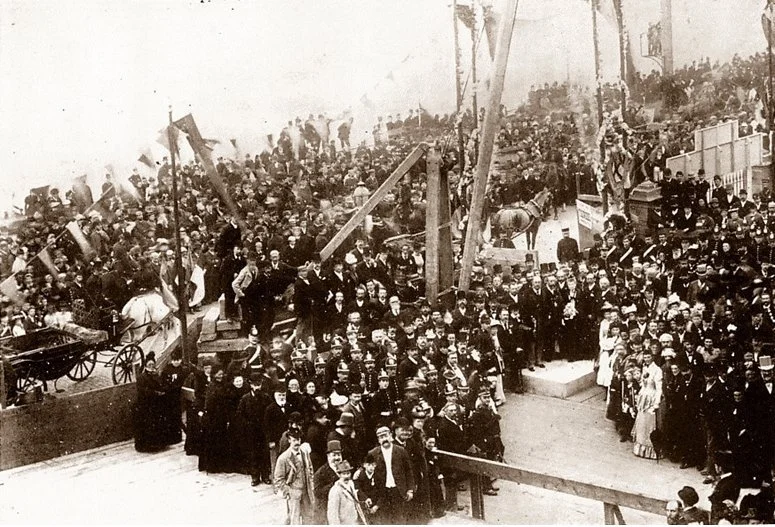
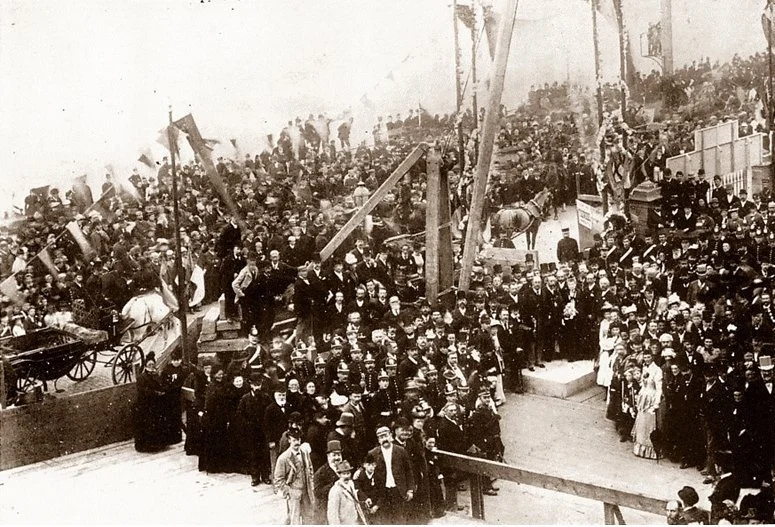
Laying the founding stone for Blackpool Tower
Married women had very limited legal rights in 1876. The Married Women's Property Act, which gave women the right to own property independently of their husbands, did not come until 1882. Before that, a woman's property passed to her husband on marriage. The legal identity of a married woman was, in most practical respects, subsumed into that of her husband.
How the Law Changed
The twentieth century brought profound change to family law. Divorce was made more accessible through successive reforms, and the grounds were gradually broadened. Legal aid, introduced after the Second World War, meant that access to legal services in family matters was no longer determined solely by the ability to pay.
The concept of irretrievable breakdown as the sole ground for divorce, introduced in England and Wales in 1973, represented a significant shift in how the law understood the end of a marriage. No longer was it necessary to establish fault or wrongdoing: the law began to recognise that marriages could simply end, without the need for one party to be found to blame.
More recently, no fault divorce became available in April 2022, removing the requirement to make allegations against a spouse even within the irretrievable breakdown framework. It was a reform that practitioners had advocated for many years, and one that has changed the way many family law matters are now handled in practice.
Children and Family Arrangements
In 1876, the legal framework around children was also very different. Fathers held almost absolute rights over their children. Mothers had very limited legal standing in disputes over custody, and the welfare of the child was not yet established as the central consideration it is today.
The principle that the child's best interests should be the paramount consideration in legal proceedings was developed through the twentieth century and is now fundamental to family law practice. The Children Act 1989 remains the cornerstone of modern child law in England and Wales, establishing a framework built around the welfare of the child rather than the rights of parents.
Family Law Today
At Blackhurst Budd, our family law team advises clients on divorce and separation, arrangements for children, and financial settlements. The legal framework within which we do that work is unrecognisable from 1876, but the need for clear, sensitive advice at some of life's most difficult moments has not changed at all.
As we mark 150 years of practice in Blackpool this year, that continuity is something we reflect on with both pride and a genuine sense of responsibility.